
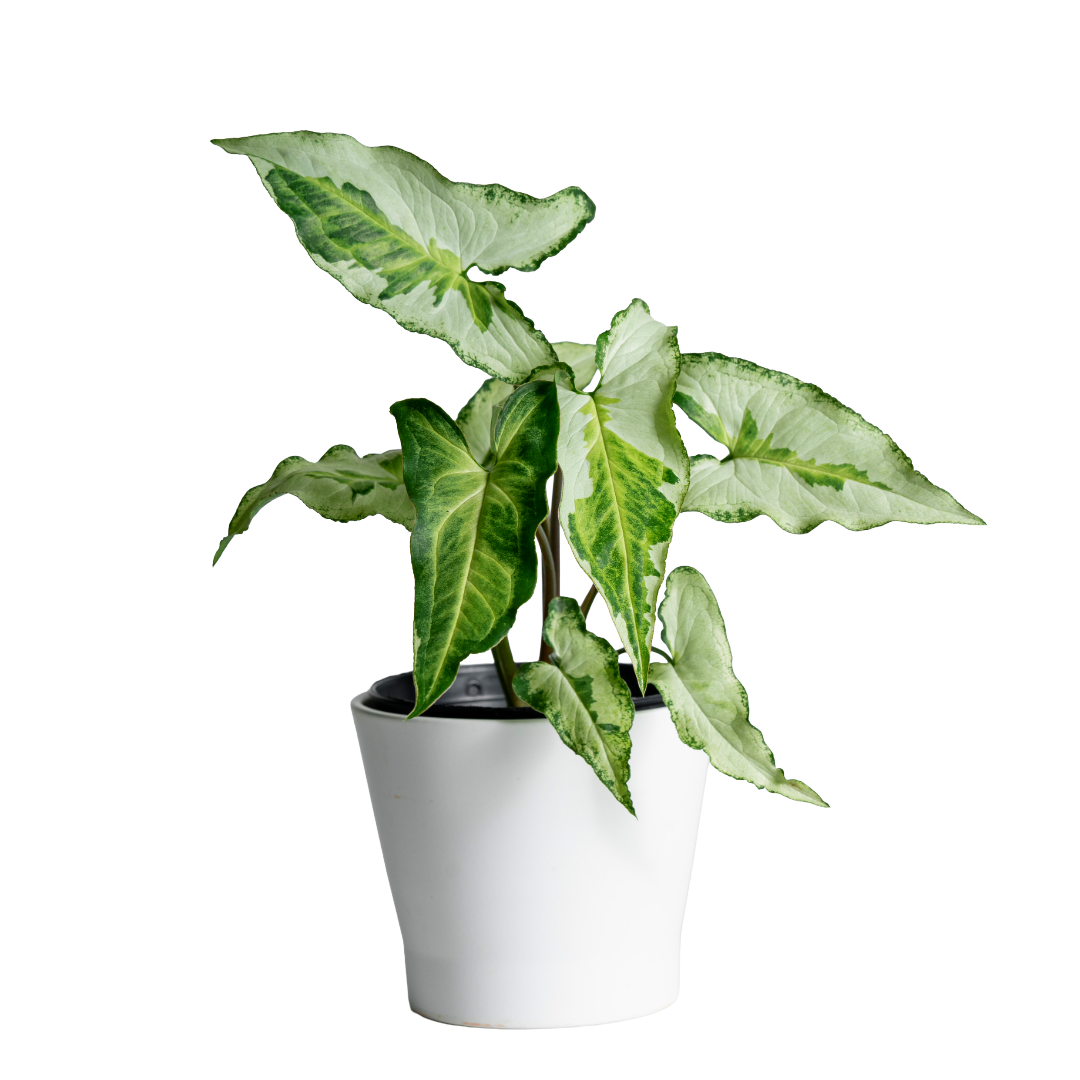
Syngonium
Share
Caring for Syngoniums (also known as Arrowhead Plant) is relatively easy, as long as you pay attention to some basic needs of the plant. This tropical climbing plant is very popular indoors and is characterized by its decorative, often arrow-shaped leaves. Here is a detailed guide to Syngonium care:
1. Temperature
Syngoniums are originally from the tropical regions of Central and South America and therefore prefer warm temperatures. The ideal temperature is between 18°C and 24°C. They are not frost-hardy and should therefore not be exposed to temperatures below 10°C. Too low temperatures can inhibit growth and weaken the plant.
2. Light
Syngoniums prefer bright, indirect light, but can also tolerate slightly less light. Direct sunlight should be avoided as the leaves can easily burn. A location near a window, but without direct sunlight, is ideal.
3. Substrate
The right substrate is crucial for the plant's growth. Syngoniums prefer a loose, well-draining substrate that retains water well but also allows excess water to drain quickly. A mix of high-quality potting soil, perlite, and a little orchid bark or coconut fiber ensures good aeration and moisture retention. It is important that the substrate is not too dense, as the roots need air.
4. Watering
Syngoniums like consistently moist soil, but not waterlogging. It is important to check the soil regularly and water the plant when the top few centimeters of soil are dry. However, too much water can cause root rot. In winter, when growth is slower, watering should be reduced.
5. Humidity
Since Syngoniums are tropical plants, they prefer higher humidity. An ideal humidity is 50-70%. In dry winter months or in air-conditioned rooms, it can be helpful to increase humidity by regularly misting the plant or using a humidifier. A location in the bathroom, where humidity is higher, could also be beneficial.
6. Climbing Aids
Syngoniums are climbing plants and need support to grow upwards. A climbing aid, such as a moss pole or trellis, is a good way to guide the plant. Moss poles have the advantage of retaining moisture well and promoting root growth. Over time, the plant's shoots will wrap around the climbing aid and continue to grow upwards.
7. Fertilization
During the growing season, i.e., in spring and summer, it is advisable to fertilize Syngoniums regularly. A liquid fertilizer for green plants every 4–6 weeks is usually sufficient. In autumn and winter, when growth slows down, fertilization should be reduced or stopped entirely.
8. Repotting
Syngoniums grow relatively quickly and can be repotted every 1–2 years to give them more space for their roots. When repotting, ensure that the new pot is only slightly larger than the old one to prevent waterlogging. A pot that is too large can cause the substrate to stay wet for too long and the roots to rot.
9. Pests and Diseases
Syngoniums are relatively resistant to pests, but they can be affected by spider mites, mealybugs, and scale insects, especially if the humidity is too low. It is therefore advisable to regularly check the plant for pests. If infested, treatment with a mild insecticide or cleaning the leaves with a damp cloth can help.
10. Propagation
Syngoniums are very easy to propagate by cuttings. Cut a shoot with at least one leaf and a node, place the cutting in a glass of water or directly into moist substrate. After a few weeks, the cutting will form roots and can then be planted in its own pot.
Conclusion
Syngoniums are relatively easy to care for if their basic needs for warmth, humidity, and a loose substrate are met. With proper care, they will grow quickly and unfold their magnificent, decorative leaves. Climbing aids and regular repotting also promote healthy growth.