
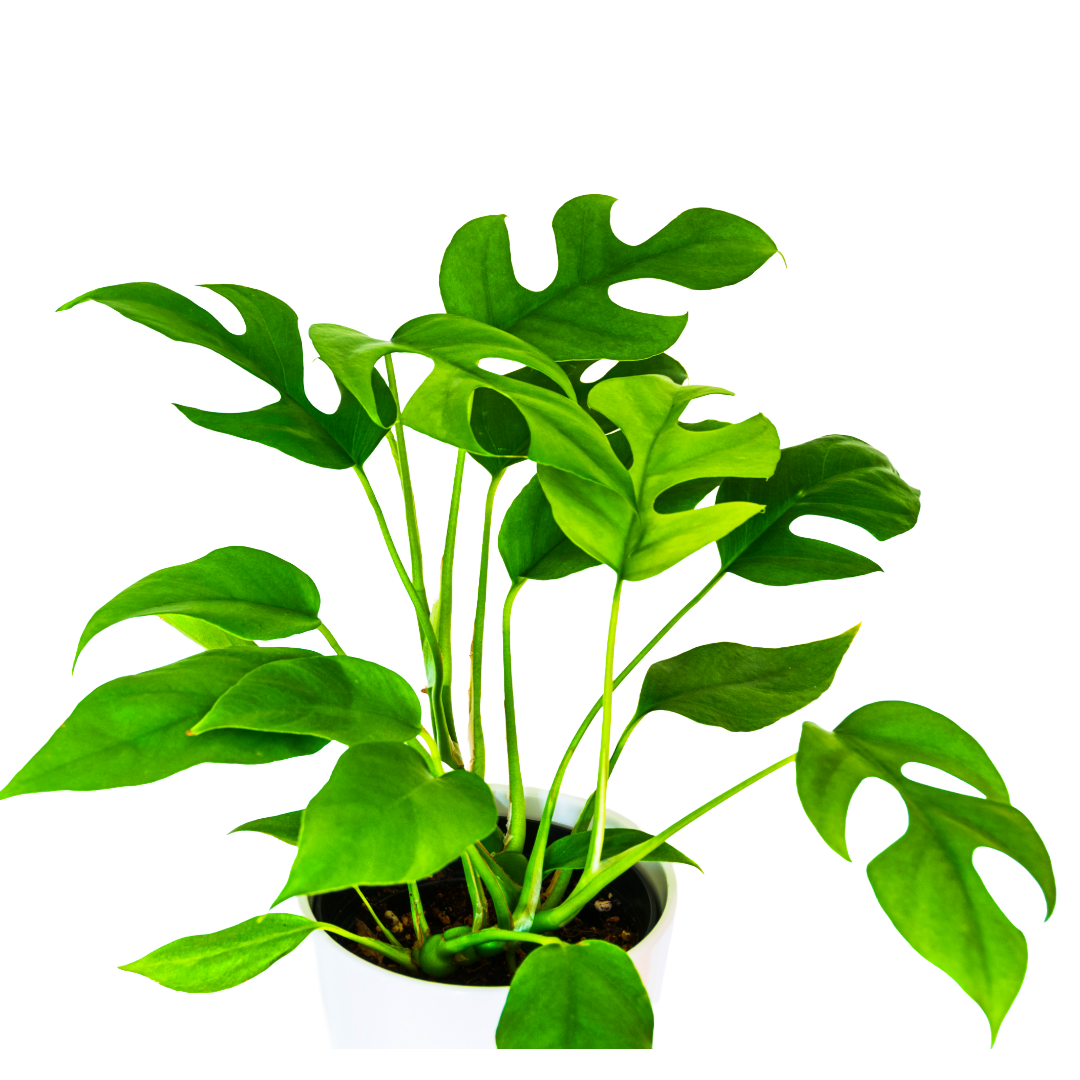
Rhaphidophora
Share
The Rhaphidophora is a tropical climbing plant from the arum family (Araceae), which is very popular in many households due to its elegant appearance and rapid growth. It is characterized by shiny, heart-shaped leaves and the ability to grow up trellises or even walls. Here are the most important care steps and tips to ensure your Rhaphidophora grows and thrives healthily.
1. Temperature
Rhaphidophoras prefer warm temperatures that match their tropical origin. The ideal temperature is between 18°C and 25°C. You should protect the plant from cold drafts and sudden temperature fluctuations, as it is sensitive to cold. Temperatures below 10°C can lead to growth disorders or even the death of the plant.
The plant feels particularly comfortable during the summer months, but even in the cooler months, the temperature should be kept above 15°C. In winter months, the plant may grow slower, but it remains relatively robust under stable conditions.
2. Light
Rhaphidophora requires bright, indirect light to thrive. Direct sunlight should be avoided, otherwise the leaves can burn. A location near a window that offers filtered light through curtains or blinds is ideal. The plant also grows in moderate light, but then it will grow slower and the leaves might be smaller and less striking.
Too little light causes the plant to "etiolate" or the leaf size to decrease. To avoid this, the plant should be given as much light as possible without exposing it to direct sun.
3. Substrate
For Rhaphidophora, a well-draining, loose substrate is ideal, which aerates the roots well and prevents waterlogging. A high-quality, loose potting soil mixed with perlite or orchid bark ensures that the roots get enough oxygen and do not stand in water.
Rhaphidophora can benefit from a slightly acidic to neutral soil (pH 5.5 to 7). Make sure the pot has drainage holes to prevent waterlogging, as this can quickly lead to root rot.
4. Watering
Watering Rhaphidophora should always be done in conjunction with soil temperature and humidity. During the growing season (spring and summer), it is important to water regularly, allowing the substrate to dry out slightly between waterings. However, avoid letting the plant sit in standing water.
In autumn and winter, when the plant is less actively growing, watering should be reduced. Water only when the top 2-3 cm of the substrate are dry, to prevent waterlogging and protect the plant from overwatering.
5. Humidity
Rhaphidophora prefers high humidity, which is common in tropical regions. However, it also tolerates room conditions. If you live in a dry climate or struggle with low humidity during winter, it is advisable to use a humidifier or mist the plant regularly. Especially in heated rooms, humidity can drop significantly, which can lead to dry leaf edges.
6. Fertilization
During the growing season (spring to summer), Rhaphidophora requires regular fertilization to grow healthy and strong. A balanced liquid fertilizer for green plants or a special liquid fertilizer for tropical plants is recommended.
In autumn and winter, when the plant is less actively growing, you can reduce fertilization to 1-2 times per season or even stop it altogether.
7. Trellises and Support
Rhaphidophora is a climbing plant and needs a trellis to grow upwards and develop its natural climbing properties. You can use a moss pole, climbing pole, or a trellis to provide the plant with climbing opportunities. These trellises are particularly important if you want your Rhaphidophora not only to grow wide but also tall.
The plant will cling to the trellis with its aerial roots. If the plant grows particularly fast, you can also gently guide the shoots in the desired direction to maintain a uniform structure.
8. Repotting
Rhaphidophora grows relatively quickly and should be repotted every 1-2 years. A pot that is too small can restrict growth. Make sure to choose a pot that is about 2-3 cm larger than the old one to provide sufficient space for the roots.
Spring or summer are the best times to repot the plant, as it is actively growing during this period. During repotting, damaged or rotten roots should be removed.
9. Pests and Diseases
Rhaphidophora is relatively resistant to pests, but it can be affected by spider mites, mealybugs, and scale insects. Regularly check the leaves and stems for signs of pests. Regular cleaning of the leaves with a damp cloth helps to reduce the risk.
Make sure the plant is not too wet and that it gets enough light, as this can prevent diseases such as mildew or root rot.
10. Propagation
Rhaphidophora is easy to propagate by cuttings. Cut a healthy shoot with at least one leaf and an aerial root, and place the cutting in a glass of water or directly into moist substrate. After a few weeks, roots will develop, and the cutting can then be transplanted into a new pot.
Popular Rhaphidophora Species:
- Rhaphidophora tetrasperma – This species is particularly popular and is also known as "Mini Monstera" due to its distinctive, deeply incised leaves.
- Rhaphidophora cryptantha – With its striking, thick, green leaves, this species is a less known but attractive climbing plant.
- Rhaphidophora decursiva – This species has larger, deeply lobed leaves and is particularly suitable for larger rooms or plant rooms, as it grows quickly and holds well to trellises.
Caring for Rhaphidophora is relatively straightforward, as long as you pay attention to the right conditions. A warm, well-ventilated environment with high humidity, regular watering, and sufficient light ensures that this tropical plant grows healthily. The use of trellises and proper fertilization promote the rapid growth of the plant. Rhaphidophora is an excellent choice for plant lovers looking for an easy-to-care-for climbing plant that offers plenty of space and a tropical atmosphere.