
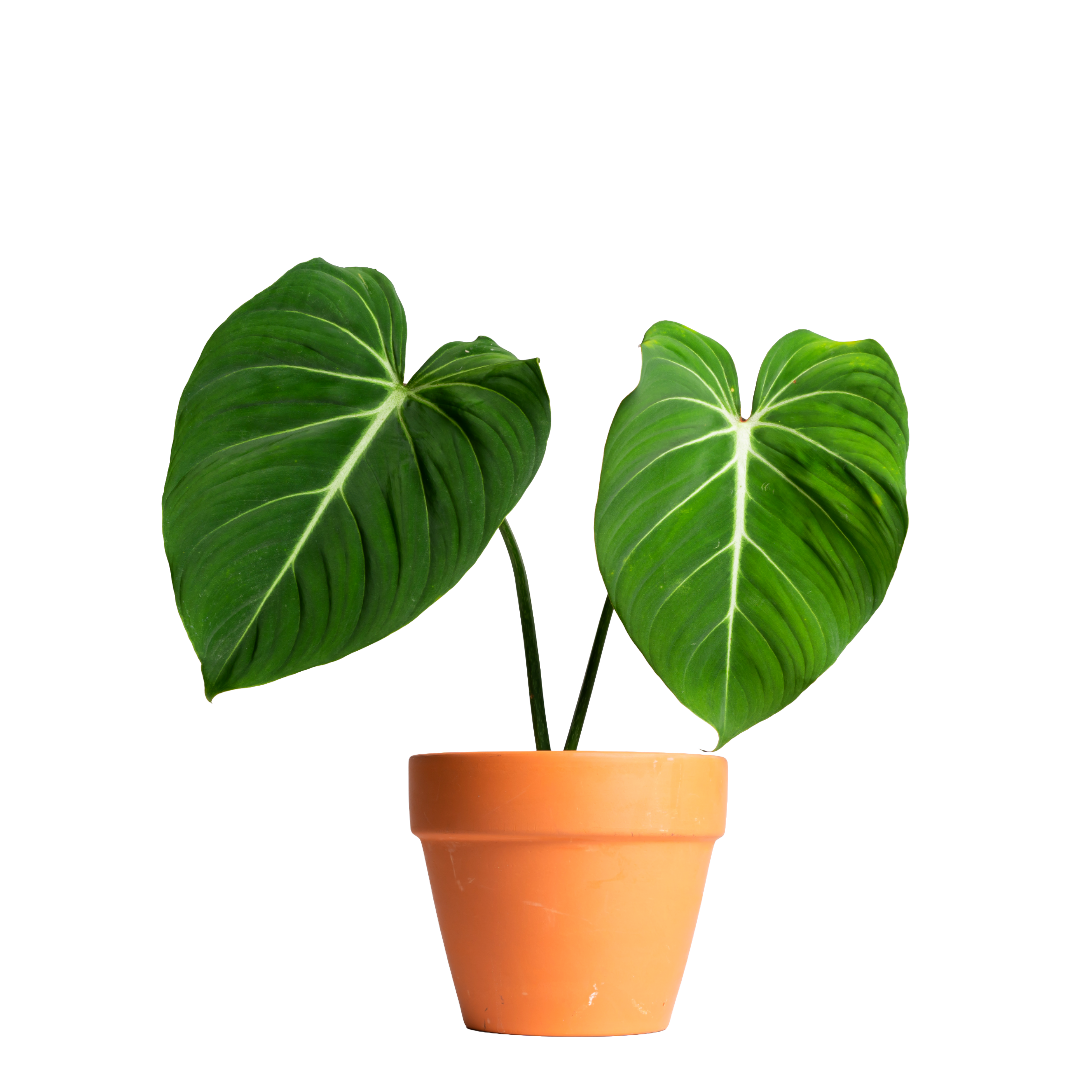
Philodendron
Share
Philodendrons are very popular houseplants, mainly due to their attractive leaves and easy care. Creeping and climbing species, such as Philodendron gloriosum (creeping) and Philodendron verrucosum (climbing), are particularly sought after by plant lovers, as their heart-shaped, velvety leaves enhance any room ambiance. Here are some important care tips to help keep your philodendron healthy and strong:
1. Location
Philodendrons prefer a bright to semi-shady location. They should be protected from direct sunlight, as its intense light can cause leaf burn. Indirect light or lighting with special plant lamps is ideal. Especially species like Philodendron gloriosum, which develop large leaves, need sufficient light to thrive.
2. Humidity
Philodendrons originate from tropical regions and therefore require high humidity to thrive. A humidity of at least 60% is ideal. Especially for species like Verrucosum, increased humidity is important, as otherwise the leaves may start to develop brown edges.
- To increase humidity, a humidifier can be used, or the plant can be placed near other plants that can increase humidity.
- Regular misting of the leaves with lime-free water can also help ensure the necessary moisture, but avoid this during the hottest hours of the day to prevent the leaves from burning.
3. Water Requirements
Philodendrons like the soil to be consistently moist, but not wet. Waterlogging should be avoided at all costs, as it can lead to root rot.
- Watering: Water the plant when the top layer of the substrate is dry. In winter, when growth slows down, the plant needs less water.
- Preferably use soft, lime-free water to avoid burdening the roots with harmful lime.
4. Temperature
Philodendrons prefer warm temperatures between 20 and 28 degrees Celsius. They should not be placed in cold rooms or drafty areas, as this can impede their growth. At temperatures below 15 degrees Celsius, growth often stagnates significantly.
5. Fertilization
During the growing season (spring and summer), philodendrons need regular nutrients to grow strong. A liquid houseplant fertilizer applied regularly is sufficient.
- Fertilize in spring and summer: Use a balanced, liquid fertilizer with a high proportion of micronutrients (e.g., potassium, magnesium).
- In winter: During the dormant phase, fertilization should be greatly reduced or stopped altogether, as the plants need fewer nutrients during this time.
Do you need a suitable fertilizer? Then we recommend PowerGrow No.1 from NurtureSystem!
6. Repotting and Substrate
Philodendrons prefer a well-draining, slightly acidic substrate. A mixture of potting soil, coir, and perlite or sand provides good drainage and air circulation at the roots.
- Repotting: Repotting should only be done every 1-2 years, when the plant becomes too large and there is no space in the pot or the substrate needs to be replaced. A larger pot promotes root growth.
- Pot size: Make sure the pot is large enough to allow for further growth, but not so large that it retains moisture for too long. Ideally, the new pot should be 1 or 2 sizes larger.
7. Climbing Aids and Trellises
While Philodendron verrucosum, for example, is a climbing species and therefore needs a climbing aid, Gloriosum is a creeping species that spreads out flatter. Nevertheless, even Philodendron Gloriosum can be equipped with a small climbing aid if one wants the plant to build a decorative structure.
Climbing species should be supported with a stable climbing aid, such as a moss pole or bamboo trellis, to spread upwards. We recommend the trellises from Kratiste. These are 100% compostable and endlessly extendable.
8. Pruning and Care
To promote a bushier growth habit, shoot tips can be regularly trimmed. This encourages the plant to form lateral shoots, making it grow more compactly. Removing old, yellow, or damaged leaves also helps the plant concentrate its energy on healthy, new shoots.
9. Pests
Philodendrons are relatively resistant to pests, but they can occasionally be infested by aphids, spider mites, or thrips. Regularly check the plant for signs of pests, especially on the underside of the leaves.
- Treatment: In case of an infestation, natural insecticides like neem oil can help. Wiping the leaves with a damp cloth is also a good method to remove the first signs of pests. You can also shower your plant and treat it preventively with neem.
Philodendrons like Gloriosum (creeping) and Verrucosum (climbing) are relatively easy to care for, but require certain conditions to reach their full potential. Ensure sufficient light, high humidity, regular fertilization, and good drainage in the substrate to maintain a healthy plant. With these simple tips, you can ensure that your philodendrons thrive and bring you joy for a long time.