
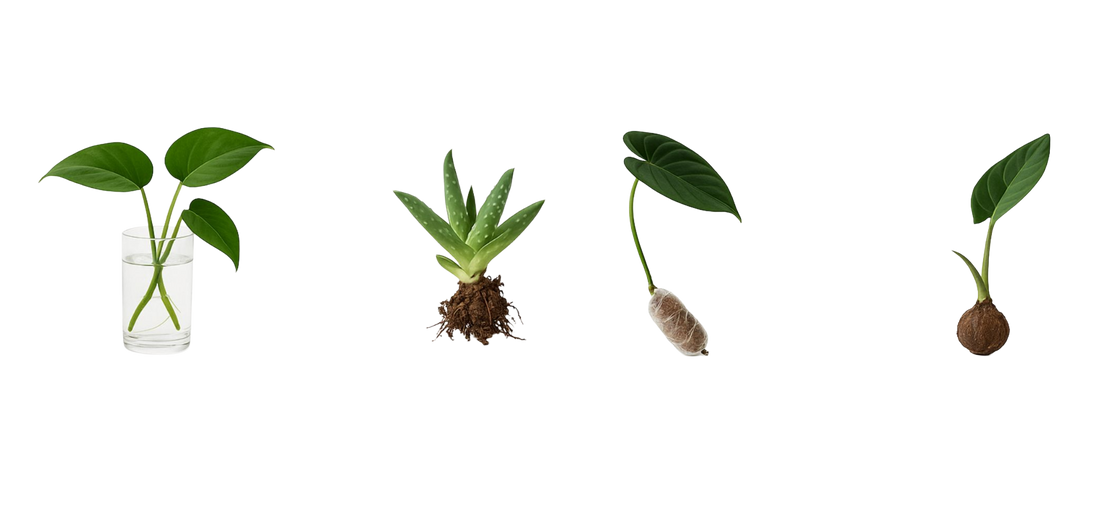
Plant propagation
Share
Propagating Plants –
Cuttings, Layering, Air Layering and Rhizomes
Do you want to expand your urban jungle, give plants to friends, or simply try out how plant propagation works? Good news: You don't need a lab or a super green thumb – just a little patience and the right method.
In this post, we'll introduce you to the most popular methods for propagating houseplants: cuttings, layering, air layering – and specifically for Alocasias: rhizome propagation.
1. Cuttings – the all-rounder
Ideal for:
- Pothos (Epipremnum aureum)
- Philodendron species
- Rhaphidophora tetrasperma
- Monstera adansonii
- Tradescantia, Pilea, Syngonium
Here's how it works:
1. Cut a stem piece directly below a leaf node.
2. Remove the lower leaves.
3. Place the cutting in water, moss, or propagating soil.
4. Keep the medium moist and change the water regularly.
5. Wait 2–6 weeks for roots, then plant.
2. Offsets & Pups – Natural Propagation
Ideal for:
- Spider plant (Chlorophytum comosum)
- Aloe Vera
- Sansevieria
- Anthuriums with basal shoots
- Syngonium with runners
Here's how it works:
1. Find small side shoots or pups.
2. Carefully separate them when they show roots.
3. If necessary, let them dry for 1–2 days (especially for Sansevierias)
4. Plant in propagating soil and keep slightly moist.
3. Air Layering – Propagation without cutting stress
Ideal for:
- Monstera deliciosa
- Ficus elastica
- Philodendron melanochrysum
- Anthurium clarinervium
Here's how it works:
1. Make a cut or score the stem below a leaf node.
2. Wrap moist sphagnum moss around the cut area.
3. Wrap cling film or a zip-lock bag around it.
4. Wait 3–6 weeks for roots to form.
5. Separate and pot the stem when roots are visible.
4. Propagating Alocasias via Rhizomes
Ideal for:
All Alocasia species
Here's how it works:
1. Carefully remove the plant from its pot.
2. Look for small rhizomes or corms.
3. Separate them with a clean knife.
4. Plant them in slightly moist propagating soil.
5. Keep them warm and moist – preferably in a mini greenhouse.
6. After a few weeks, new shoots will appear.
Best time for propagation
The ideal time for cuttings, offsets & co. is from spring to early summer. Many plants are dormant in winter – propagation will be slower or may not work at all.
Common mistakes in plant propagation
🌧️ Too much water → Rotting of cuttings – only keep slightly moist
🔪 Dull tools → Risk of infection – always disinfect
🌫️ Dry air → Poor root formation – increase humidity
☀️ Too little light → Stagnant growth – choose a bright location
Conclusion
Whether you're rooting Monstera cuttings in water, air layering Anthuriums, or fishing small corms from the soil of Alocasias – propagating plants not only brings new green inhabitants but also a lot of joy. With the right method, you can easily multiply even rare houseplants. And you'll get to know your green roommates even better in the process.