
Monstera
Share
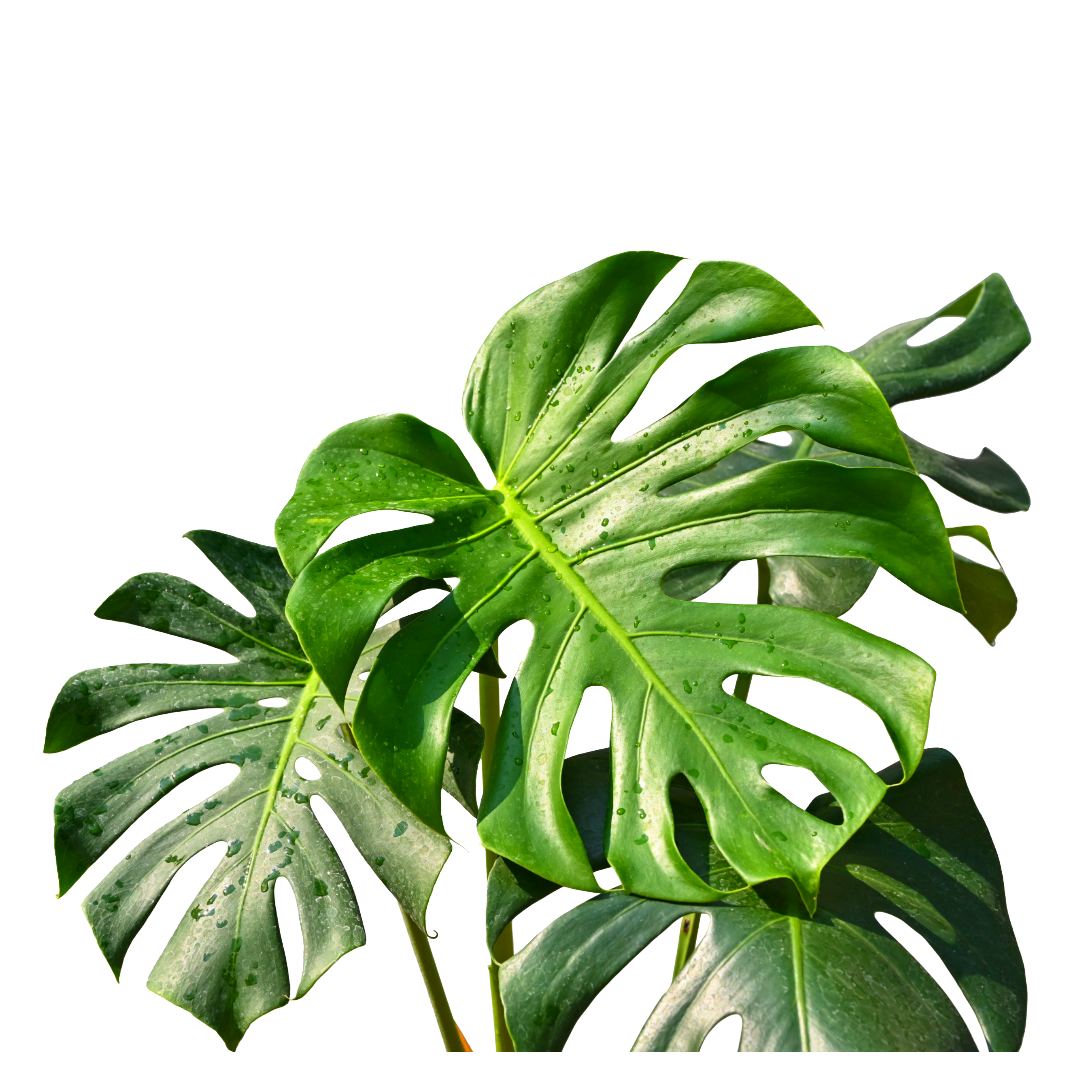
Monsteras are among the most popular houseplants and are characterized by their unique, slit leaves and tropical appearance. The variegated varieties, with white, cream-colored, or yellow patterned leaves, are particularly popular. To properly care for your Monstera, specific knowledge about the different types, their location, and other needs is essential. Here is a detailed overview of some types:
1. Monstera deliciosa
- Description: The most well-known species with large, deeply lobed leaves and distinctive holes. This plant is robust and can grow up to 20 meters tall in nature.
- Special feature: Grows quickly and is suitable for larger spaces.
2. Monstera adansonii ("Swiss Cheese Plant")
- Description: Smaller leaves with round holes. This species is more compact and is ideal for smaller spaces or as a hanging plant.
- Special feature: It can grow both hanging and climbing. If it gets a moss pole, it develops larger leaves.
3. Monstera obliqua
- Description: A rarer species with very thin and large, irregular holes. This plant is demanding to care for.
- Special feature: Rare, grows slower, and is particularly sought after by collectors. Requires high humidity and constant temperatures.
4. Monstera standleyana
- Description: This species has narrower, longer leaves. It is known for its beautiful leaf structure.
- Special feature: Grows slower and is suitable for smaller spaces. Can be trailing or climbing.
5. Monstera pinnatipartita
- Description: The leaves of this species are deeply incised and resemble those of deliciosa, but with finer cuts.
- Special feature: It is not deeply cut in its young state, but develops larger slits with age.
6. Monstera dubia
- Description: This species has heart-shaped leaves that initially show a silver variegation. It grows as an epiphyte and needs a climbing aid.
- Special feature: Its appearance changes significantly with age; the leaves become larger and later develop the typical holes.
7. Monstera acuminata
- Description: This species resembles Monstera adansonii. It has narrower leaves and grows relatively compactly.
- Special feature: Less common and ideal for smaller spaces.
8. Monstera subpinnata
- Description: A real highlight for collectors, as it has extremely finely cut leaves that almost look feathered.
- Special feature: Very decorative and grows slower, especially suitable for lovers of rare plants.
9. Monstera 'Thai Constellation'
- Description: A variegated form of Monstera deliciosa with cream-colored, marbled spots on the leaves.
- Special feature: It is delicate and susceptible to root rot and grows slower than the pure green Monstera.
10. Monstera deliciosa 'Albo Variegata' / 'Aurea variegata'
- Description: This species has striking white (albo) or yellow (aurea) spots and streaks that appear on the leaves.
- Special feature: The white/yellow variegation on the leaves is genetically determined and makes each plant unique.
11. Monstera karstenianum
- Description: This species has smaller leaves than deliciosa and is also native to tropical rainforests. The leaves are heart-shaped and have a matte surface.
- Special feature: Less common and ideal for collectors looking for more unusual Monstera species.
12. Monstera siltepecana
- Description: This Monstera has silvery-green, glossy leaves with slight variegation. The leaves are smaller and narrower than with deliciosa.
- Special feature: This species grows hanging or on a moss pole. The larger variant is Monstera siltepecana 'El Salvador'.
13. Monstera epipremnoides
- Description: Very similar leaves to Monstera adansonii, but with larger and deeper holes.
- Special feature: Also known as "Epiphyte Monstera" and needs a climbing aid, as it grows as a climbing plant in nature.
14. Monstera 'Mint Variegata'
- Description: This rare variegated Monstera has a striking, mint-green pattern on its leaves. It is a natural mutation of Monstera deliciosa.
- Special feature: Rare, as it has a particularly attractive coloring.
15. Monstera tuberculata
- Description: A lesser-known species often overlooked by most collectors. It resembles Monstera dubia but grows much slower.
- Special feature: It needs less light than most other Monstera species and grows more compactly.
16. Monstera friedrichsthalii
- Description: A smaller Monstera species with delicate, glossy leaves that develop larger holes as they grow.
- Special feature: Fast-growing and suitable as a hanging plant.
2. Location
Monsteras need a bright but not directly sunny location. Too much direct sun can lead to leaf burn. Indirect, bright light is ideal.
- A location near a window, but without direct sunlight, is perfect. These plants also prefer slightly shaded areas and tolerate less light, but with slower growth.
- For variegated varieties such as Albo Variegata and Thai Constellation: These require more light than the normal green varieties to maintain their unique leaf patterns. Too little light can cause the plants to show less variegation or even become "greener".
- Monsteras can also survive in shadier areas, but growth will be slower and the leaves will usually remain smaller. This is particularly critical for variegated varieties, as they can lose their unique patterns and turn green if there is too little light.
3. Humidity
Monsteras are tropical plants and prefer high humidity, especially in the winter months when indoor air is often too dry.
- Ideal humidity: A humidity of 60–80% is optimal. Variegated Monstera species such as Albo Variegata or Thai Constellation are particularly sensitive to low humidity and quickly develop brown edges on their leaves.
-
Tips for increasing humidity:
- Humidifier: In dry winters, a humidifier can help maintain healthy humidity levels.
- Misting: Regularly mist the leaves with lime-free water to increase humidity. Make sure not to mist in direct sunlight, as this can lead to burns.
4. Water Requirements
Monsteras prefer consistent moisture in the substrate. Avoid waterlogging, as it can quickly lead to root rot.
- Watering: Water the plant when the top layer of soil is slightly dry. Too much water can suffocate the roots, while too little water inhibits growth.
-
Irrigation:
- Use soft, lime-free water to protect the root system.
- In winter, when the plant grows slower, less watering should be done. Make sure the substrate does not dry out completely.
For better control of moisture in the pot, we recommend SUStee moisture meters.
5. Temperature
Monsteras are tropical plants that prefer warm temperatures. They should never be exposed to temperatures below 15 °C.
- Optimal temperatures: 18–25 °C are ideal. In winter, it is important that temperatures do not drop below 15 °C, as Monsteras are sensitive to cold.
- Avoid drafts: These plants are sensitive to drafts and sudden temperature fluctuations. Place your Monstera in a location without strong air movement.
6. Fertilization
Monsteras grow faster during the growing season (spring and summer) and therefore require regular nutrient supply.
- Liquid fertilizer: Use a balanced liquid fertilizer that is used regularly.
- In winter: During the winter dormancy phase, it is advisable to stop fertilizing, as growth is significantly slower during this time.
7. Repotting and Substrate
Monsteras need a well-draining, slightly acidic substrate that both stores water and drains excess moisture.
- Substrate: A mixture of potting soil, coir, and perlite or even special substrate for tropical plants is very suitable.
- Repotting: Monsteras should be repotted every 1-2 years, especially if the pot becomes too small or the substrate is depleted. Make sure the new pot is about 2–3 cm larger than the old one.
8. Climbing Aids and Care
Monsteras are climbing plants and need stable support to live out their natural growth.
- Moss pole: Use a moss pole so that the plant's aerial roots can anchor well and the plant can climb.
Monsteras are robust plants. With proper care – sufficient light (but no direct sun), high humidity, regular fertilization, and a well-draining substrate – they will become magnificent, healthy-looking plants that will bring you joy for years. For variegated forms, make sure to consider the correct lighting conditions and care habits so that they retain their beautiful patterns.