
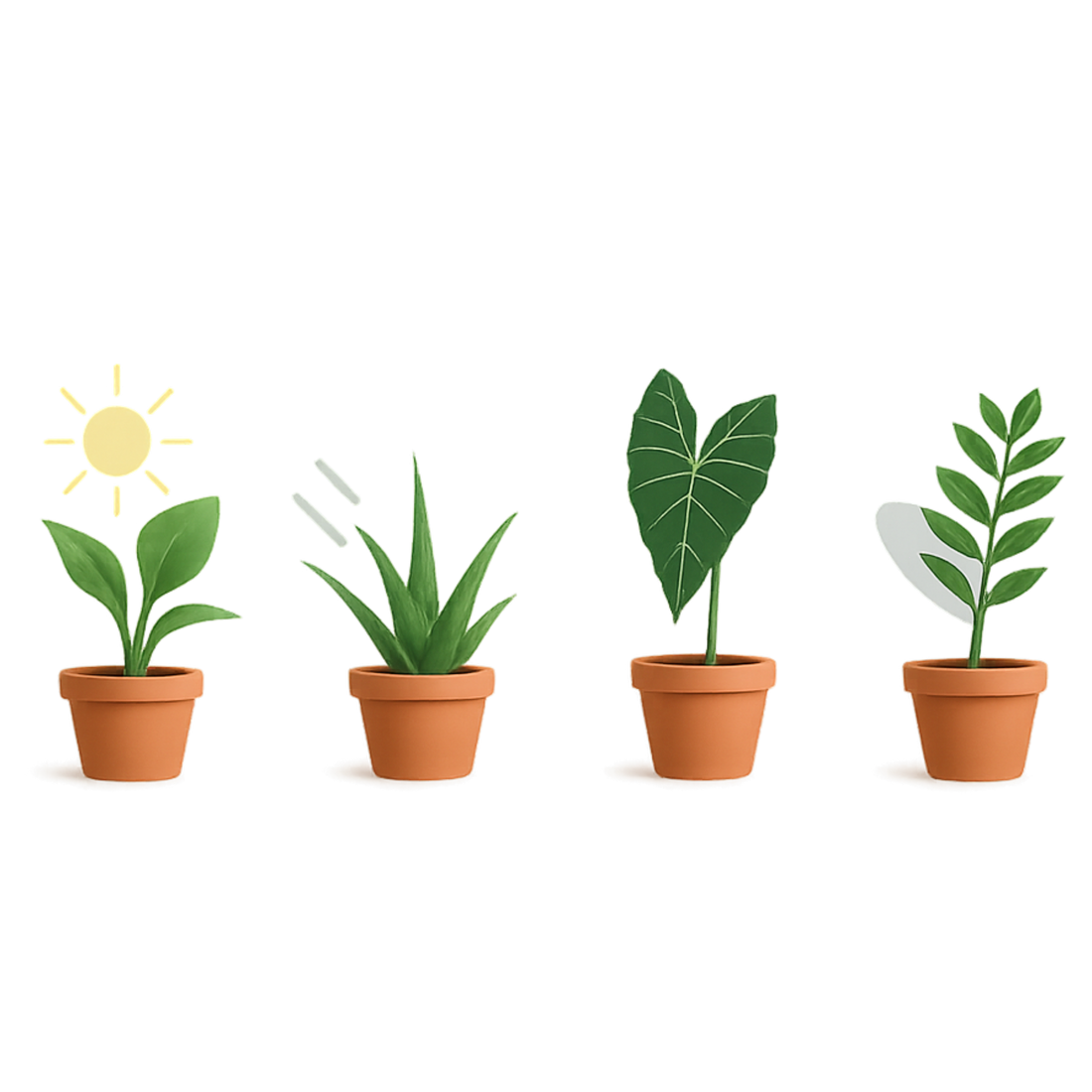
Understand Lighting Conditions Correctly: How to Find the Perfect Spot for Your Houseplants
Share
If you want healthy, strong, and beautiful houseplants, there's one main thing you need to understand:
Light is life. While watering and fertilizing often get all the attention, proper lighting
is frequently underestimated – yet it's crucial for the growth, color, and even the
survival of your plants.
In this article, you will learn:
- How to properly assess light conditions in your home
- Which plants have what light requirements
- What "bright," "indirect," or "shady" truly mean
- How to recognize light deficiency – and what you can do about it
Why Light is So Important
Light is to plants what food is to us. Through photosynthesis, they convert light
into energy. Depending on their origin (e.g., rainforest floor or savannah edge), plants
have very different demands for light intensity and duration.
1. Understanding Light Zones in Your Home:
South: Very bright and direct light. Ideal for sun-loving plants like cacti or Ficus.
East: Morning sun and mild light. Ideal for most plants, especially tropical plants.
West: Afternoon and evening sun. Perfectly suited for flowering plants like orchids.
North: No direct light. Instead, weak light. Perfect for shade plants like Sansevieria.
2. Light Types Explained – What Plant Descriptions Really Mean
Full sun: At least 5 to 6 hours of direct sun. Very good for cacti or lemon trees.
Bright, indirect light: Very bright, but no direct sunlight hits the plant. Ideal for Monstera and Philodendron.
Partial shade: Bright, but diffuse light, temporary shade. Perfect for Calathea or Peperomia.
Shade: Very little natural light. Best suited for Pothos, Sansevieria, or Zamioculcas.
3. Light Requirements of Typical Houseplants
| Plant | Light Requirement |
| Monstera deliciosa | Bright, indirect light |
| Ficus lyrata | Very bright, also sun |
| Zamioculcas zamiifolia | Shade to medium bright |
| Alocasia | Bright, no direct midday sun |
| Calathea | Partial to full shade |
| Sansevieria | Tolerates almost anything, ideal for low light |
4. How to Recognize Light Deficiency
Typical signs of light deficiency:
- Long, thin shoots
- Small or deformed new leaves
- Lack of flowering
- Pale or yellow leaves
- Stagnant growth
Solution: Move the plant closer to the window or use grow lights.
5. Tips for Optimal Light Usage
- Rotate your plants regularly so they grow evenly.
- Use light-colored walls or mirrors to reflect light.
- Avoid curtains or blinds during the day.
- In dark rooms, use artificial light (e.g., LED grow lights).
6. Artificial Light – Useful for Dark Corners?
Yes! Full-spectrum LED grow lights are now affordable and effective. Especially
helpful:
- In winter when light is scarce
- In north-facing rooms or bathrooms
- For sensitive plants
- Make sure the lamp hangs 10–30 cm above the plant and shines for at least 8
hours daily.
Good light is no secret – but it makes all the difference. If you learn to
properly assess the light conditions in your home and assign suitable spots to your green
roommates, you will be rewarded with strong growth, lush green
leaves, and blooming plant joy.