
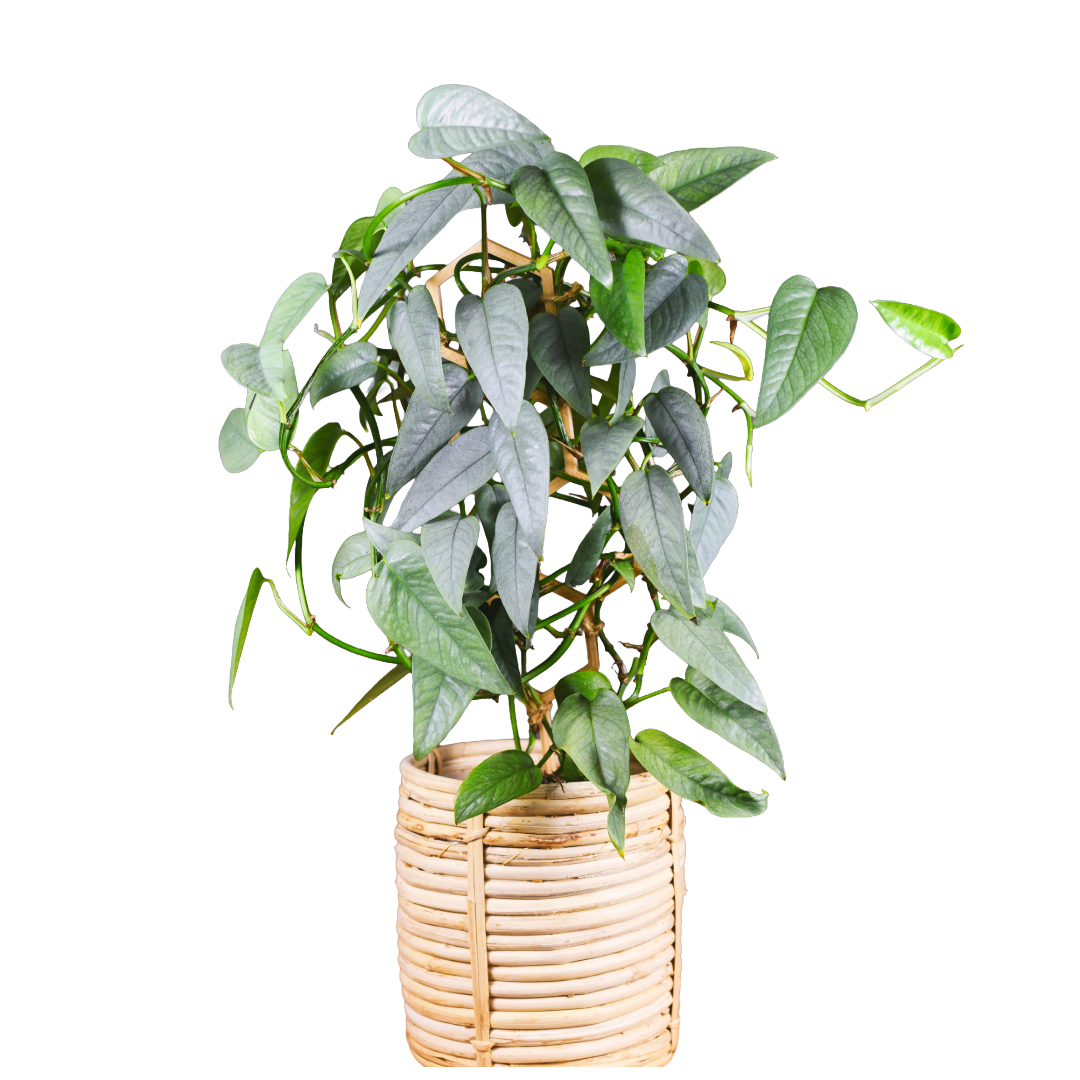
Epipremnum
Share
Pothos (Epipremnum) is a super easy-care and adaptable plant that is just as suitable for beginners as it is for experienced plant enthusiasts. With its shiny, heart-shaped leaves and ability to adapt to almost any environment, it is an ideal choice for your home. Here's how to properly care for your Epipremnum so that it grows healthy and brings you long-lasting joy.
1. Temperature
Pothos prefer warm temperatures and feel particularly comfortable at 18°C to 25°C. They are quite sensitive to cold, so protect them from drafts and cold weather. Temperatures below 10°C are too cold for them and can stop growth. Since the plant originates from tropical regions, it likes it warm and can tolerate higher temperatures well, as long as it gets enough moisture.
2. Light
Pothos are quite flexible when it comes to light, but they prefer bright, indirect light. Direct sunlight should be avoided as it can scorch the leaves. A window sill with sheer curtains or a room with sufficient light but no direct sun is ideal for pothos. They will also manage in shadier corners, but then they will grow slower and the leaves may become somewhat paler or less shiny.
Too little light can cause the plant to "etiolate" – meaning it develops long, thin shoots with little foliage.
3. Substrate
Pothos is not particularly demanding when it comes to substrate, but it should be well-draining so that the roots get enough oxygen. A potting mix for houseplants is usually completely sufficient if you mix it with some perlite or sand so that water can drain quickly. You should definitely avoid waterlogging, as it can lead to root rot.
The pH value of the substrate should be slightly acidic to neutral (between 5.5 and 7). If you want to ensure even better drainage, you can loosen the substrate with some orchid bark or pumice stone. Make sure the pot always has drainage holes so that excess water can drain away.
4. Watering
Water your pothos regularly, but always allow the substrate to dry out slightly between waterings. It is ideal to let the top 2-3 cm of soil dry before watering again. Avoid overwatering the plant – standing water can quickly lead to root rot. Make sure to water with warm water, as cold water can cause stress to the plant.
In winter, when the plant grows slower, you can reduce watering slightly. Only water when the soil is truly dry.
5. Humidity
Pothos like moderate to high humidity. It feels good in normal rooms, but if the air is too dry, for example in winter, it can help to regularly mist the plant or use a humidifier. A humidity of 40–60% is perfect for the plant.
6. Fertilization
During the growing season (spring and summer), you can feed your Epipremnum every 4-6 weeks with a liquid houseplant fertilizer. A balanced fertilizer works well. Make sure not to over-fertilize – less is more here. Too much fertilizer can harm the plant and stress the roots.
In winter, when the pothos grows less, you should stop fertilizing or fertilize very sparingly.
7. Climbing Aids
Since Epipremnum is a climbing plant, you need climbing aids for it to grow upwards. You can use moss poles, trellises, or simply strings so that the plant can hold on with its aerial roots. Especially for fast-growing plants, a climbing aid is helpful to guide the shoots in the desired direction.
If you don't want to use a climbing aid, you can also let it grow as a hanging plant.
8. Propagation
Pothos can be easily propagated by cuttings. Cut a healthy shoot with at least one leaf and an aerial root and place the cutting either in a glass of water or directly into fresh substrate. After a few weeks, roots usually develop, and you can plant the cutting in its own pot. This way you can quickly get new plants for your home.
9. Types of Epipremnum
There are different types and varieties of Epipremnum, which differ in their leaf colors and patterns. Here are some popular varieties:
- Epipremnum aureum (Golden Pothos): The classic pothos with green leaves and golden or white variegation. It is particularly robust and grows quickly.
- Epipremnum pinnatum: This species has larger leaves and shows a stronger tendency to climb upwards.
- Epipremnum aureum 'Marble Queen': A particularly beautiful variety with marbled leaf markings in white and green.
- Epipremnum aureum 'Neon': This variety has striking bright yellow to green leaves that glow beautifully in the light.
10. Pests and Diseases
Pothos are relatively resistant to pests, but occasionally they can be affected by spider mites, aphids, or mealybugs. Regularly check the leaves for small pests or sticky residues. If you find any, you can rinse the affected areas with water or use a mild insecticide.
Also, make sure you don't keep the plant too wet. Waterlogging can lead to root rot and powdery mildew, so you should ensure that the pot drains well.
Epipremnum is an easy-care plant that, with the right conditions, grows quickly and adapts well to various light conditions. With regular watering, good drainage, and moderate humidity, it will thrive. Climbing aids promote its upward growth, and with a little fertilization, the plant will remain healthy and strong. Just make sure to protect it from the cold and water it regularly, and you will enjoy your pothos for a long time!