
Fertilizer
Share
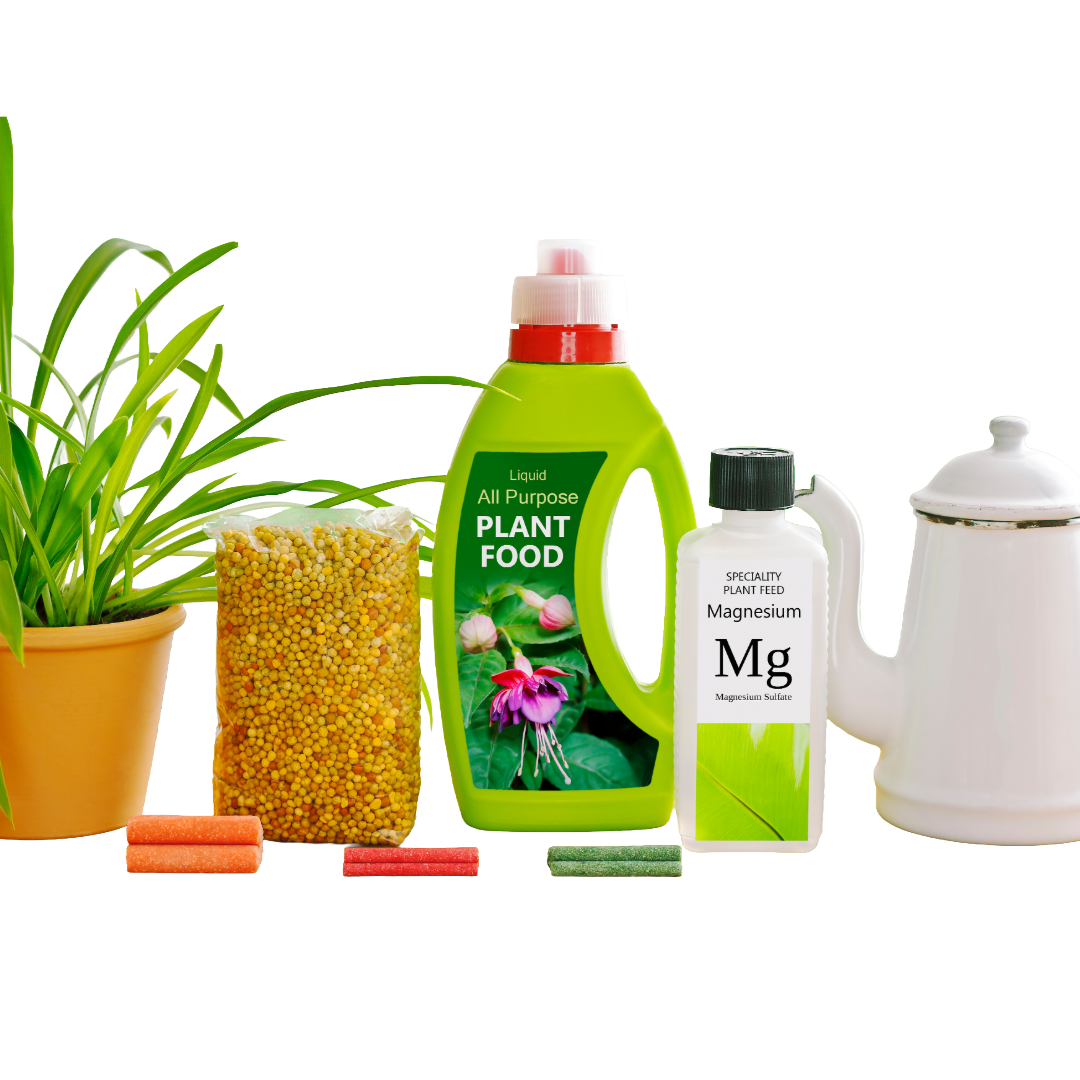
If you want to properly care for your plants, the right fertilizer is a crucial factor. But what exactly is in a plant fertilizer? Which components are important and what are they good for? We will explain the most important ingredients, in both liquid and solid fertilizers, so that you can choose the right fertilizer for your plants.
1. Nutrients: The main components
Plants need a variety of nutrients, but the three most important are nitrogen (N), phosphorus (P), and potassium (K). These nutrients are often referred to as NPK and are found in almost every fertilizer.
-
Nitrogen (N): Nitrogen is particularly important for plant growth, especially for the development of green leaves and stems. A fertilizer with a high nitrogen content is particularly useful if you want to stimulate the vegetative growth of your plant, e.g., for vegetable plants or green-leaved plants.
- Too much nitrogen, however, can cause the plant to produce too much leaf mass and fewer flowers or fruits.
-
Phosphorus (P): Phosphorus is crucial for root formation and helps the plant store and transfer energy. Phosphorus is particularly important during germination and flowering, as it supports the development of roots and flowers.
- Lack of phosphorus often leads to weak roots and poor flower formation.
-
Potassium (K): Potassium strengthens the plant's general disease resistance and ensures that it better withstands stress (e.g., drought or extreme temperatures). It also promotes fruit development and cell structure.
- A potassium deficiency can make the plant susceptible to diseases and impair fruit growth.
2. Secondary Nutrients
In addition to the primary nutrients, there are also secondary nutrients, which are needed in smaller quantities but are nevertheless essential. These include:
- Calcium (Ca): Calcium is important for cell wall formation and helps keep the plant stable. A deficiency can lead to soft, brittle plants.
- Magnesium (Mg): Magnesium is a component of chlorophyll and is therefore important for photosynthesis. A deficiency is indicated by yellow leaves (chlorosis), especially between the leaf veins.
- Sulfur (S): Sulfur helps in the formation of amino acids and is important for the overall health of the plant. A sulfur deficiency can lead to yellow leaves.
3. Micronutrients
The so-called micronutrients are only required in tiny amounts, but they play a major role in plant growth and development. These include:
- Iron (Fe): Important for chlorophyll production. An iron deficiency manifests itself in yellowish leaves, especially on young leaves.
- Manganese (Mn), Zinc (Zn), Copper (Cu), Boron (B), and Molybdenum (Mo): These micronutrients are also crucial for various processes such as enzyme activity, cell division, and the stability of plants.
4. Liquid fertilizer vs. Solid fertilizer: What's the difference?
-
Liquid fertilizer: Liquid fertilizers are very quickly available to the plant, as they enter the soil directly with the water. They are well suited for plants that require rapid nutrient absorption. Liquid fertilizers come in various forms, e.g., as concentrated solutions or as a ready-to-use mixture that can be added directly to the watering can.
- Advantage: Fast-acting, easy to use, ideal for foliar feeding (also as a spray fertilizer).
- Disadvantage: Must be applied regularly as the effect wears off.
-
Solid fertilizer: Solid fertilizers come in the form of granules or pellets and are applied directly to the soil. They release their nutrients more slowly, as they must first be dissolved by watering or rain.
- Advantage: Slow, continuous nutrient release, less frequent fertilization necessary.
- Disadvantage: Can be more difficult to dose and takes longer for nutrients to become available.
5. Organic vs. Mineral Fertilizer
-
Organic fertilizers: These fertilizers come from natural sources such as compost, manure, plant residues, or algae. They are gentler on the plant and at the same time improve soil structure and vitality by promoting microorganisms.
- Advantage: Slow nutrient release, improvement of soil quality, more environmentally friendly.
- Disadvantage: Can be more expensive and takes longer for nutrients to become available.
-
Mineral fertilizers: These fertilizers contain nutrients in concentrated, synthetic form and act very quickly. They can be precisely dosed, but excessive use can deplete the soil and disturb the ecological balance.
- Advantage: Fast effect, easy dosing.
- Disadvantage: Can burden the soil in the long term, little long-term soil improvement.
6. How to choose the right fertilizer?
The choice of the right fertilizer depends on the plant and its needs. In general, you should:
- For green houseplants, choose a fertilizer that has a high nitrogen (N) content, as these plants build up a lot of leaf mass.
- For flowering plants, the fertilizer should contain a little more phosphorus to promote good flower formation.
- For fruit plants or vegetables, a fertilizer with a higher potassium (K) content can be useful to support fruit growth and disease resistance.
A good fertilizer is like a multivitamin for your plants – it provides them with everything they need to grow healthy and strong. You can choose between liquid and solid fertilizers, depending on what you prefer and how quickly you want to see results. The correct dosage is important to avoid over-fertilizing the plant, and you should always keep an eye on your plants' needs.