
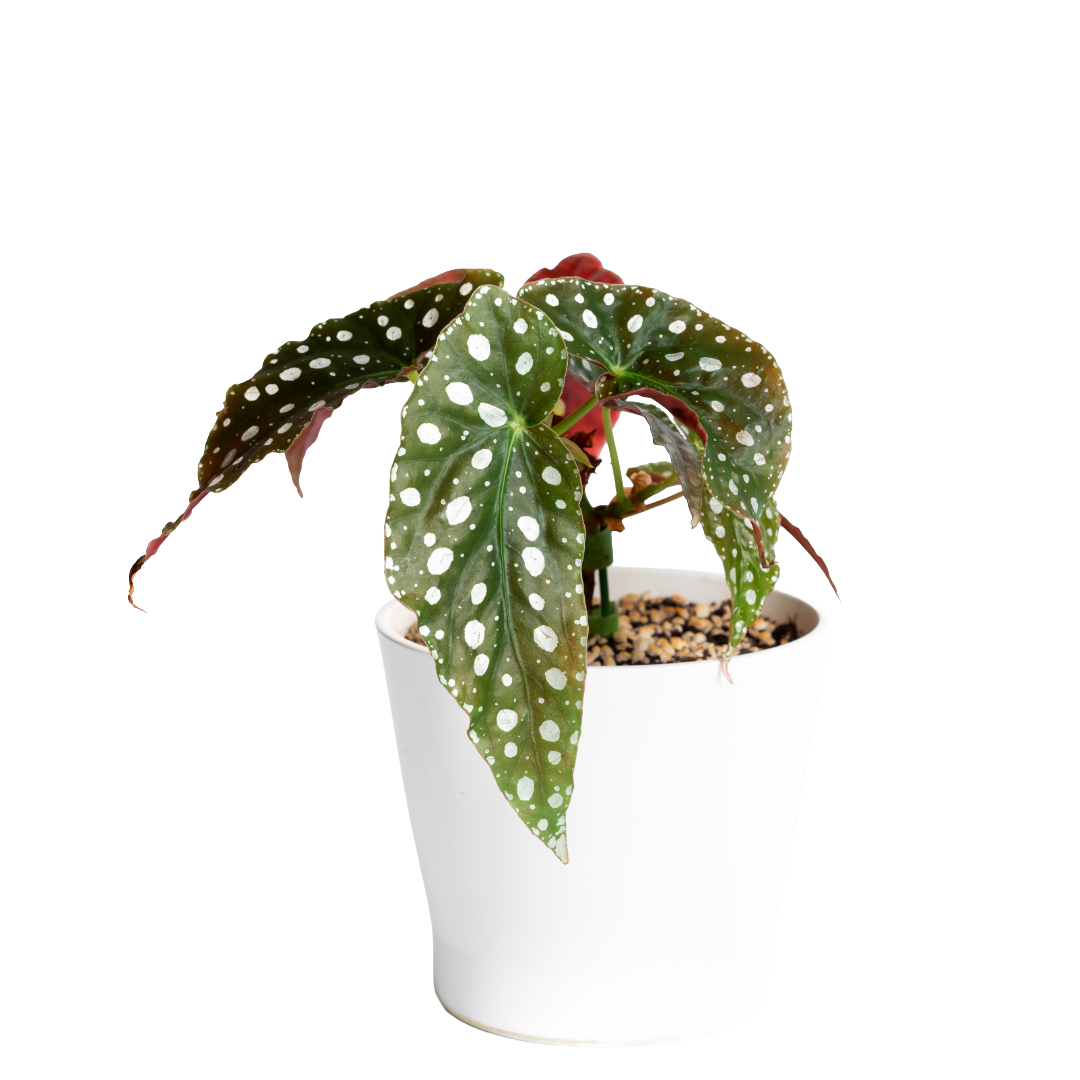
Begonias
Share
Begonias are wonderful plants that can be found in many living rooms and gardens with their striking leaves and colorful flowers. They are relatively easy to care for if you provide the right conditions. Here's everything you need to know to ensure your begonias grow strong and stay beautiful.
1. Temperature
Begonias are warmth-loving plants and prefer a comfortably warm environment. The ideal temperature for begonias is between 18°C and 24°C. Make sure the plant is not exposed to cold temperatures – it cannot tolerate frost. Also, avoid drafts and do not place your begonia near radiators or air conditioners, as extreme temperature fluctuations can stress the plant.
2. Light
Begonias need bright, but indirect light. Direct sun should be avoided as it can scorch the leaves. A location near a window with sheer curtains or a spot that doesn't get full sun exposure is ideal. If your begonia doesn't get enough light, it may produce fewer flowers and its leaves may lose color.
3. Substrate
Begonias like their substrate to be loose and well-draining. A potting mix for houseplants, mixed with some perlite or sand, ensures good aeration of the roots and prevents waterlogging. Waterlogging is a common reason why begonias suffer root damage and become susceptible to diseases. Make sure the pot has drainage holes so that excess water can drain away.
If you have a special begonia species like the tuberous begonia, you should also ensure that the substrate is slightly acidic (pH 5.5–6.5).
4. Watering
Begonias like consistent moisture, but waterlogging is their enemy. Water the plant regularly, but always allow the substrate to dry out slightly between waterings. It's best to use warm water and water directly at the roots. If you water with cold water, the plant can get stressed.
In winter, when the plant goes into a dormant phase, watering should be reduced. Water only when the substrate is completely dry to prevent root rot.
5. Humidity
Begonias love moderate humidity. In dry rooms or during the heating season in winter, it can be helpful to support the plant with a humidifier or to mist it regularly. If you place it in the bathroom or another humid room, it will also thrive there. Humidity of about 40–70% is optimal.
6. Fertilizing
During the growing season (spring to summer), your begonia needs nutrients to grow strong. You can use a liquid fertilizer for houseplants every 4–6 weeks. Make sure you don't overdo the fertilizer, as this can damage the roots. Begonias are sensitive to over-fertilization, so it's always better to fertilize a little less than too much.
In winter, when the begonia is dormant, you can stop fertilizing completely or reduce it to a minimum.
7. Staking and pruning of shoots
Some begonia species need a stake to climb on. You can use a trellis, a moss pole, or another stable support. Make sure you regularly guide the shoots in the right direction so that they grow evenly and develop well.
8. Repotting
Begonias don't grow incredibly fast, but it's recommended to repot them every 1–2 years if their current pot becomes too small. Choose a new pot that is about 2–3 cm larger than the old one, and make sure to use a fresh, loose substrate. Spring and summer are the best times for repotting, as the plant is most active then.
9. Flower care
When your begonia blooms, it will reward you with wonderful colors and shapes. Make sure to regularly remove spent flowers to encourage the plant to continue producing new blooms. Trimming deadhead flowers also helps keep the plant healthy and promotes the growth of new shoots.
10. Pests and diseases
Begonias are relatively resistant to pests, but they can sometimes be infested with aphids, spider mites, or scale insects. Regularly check the leaves for small pests or spots that could indicate diseases. If you discover pests, you can gently wipe the affected areas with water or a mild insecticide.
11. Propagation
Begonias are relatively easy to propagate through leaf cuttings or root division. If you use leaves, cut a healthy leaf with a small piece of stem and place it in water or moist soil until it roots. Alternatively, you can propagate the plant in spring or summer by root division, carefully dividing the root ball into several parts and planting them in fresh substrate.
Ensure sufficient warmth, humid air, good light, and regular but not too intensive care – this way, your begonia will always be an eye-catcher in your home.