
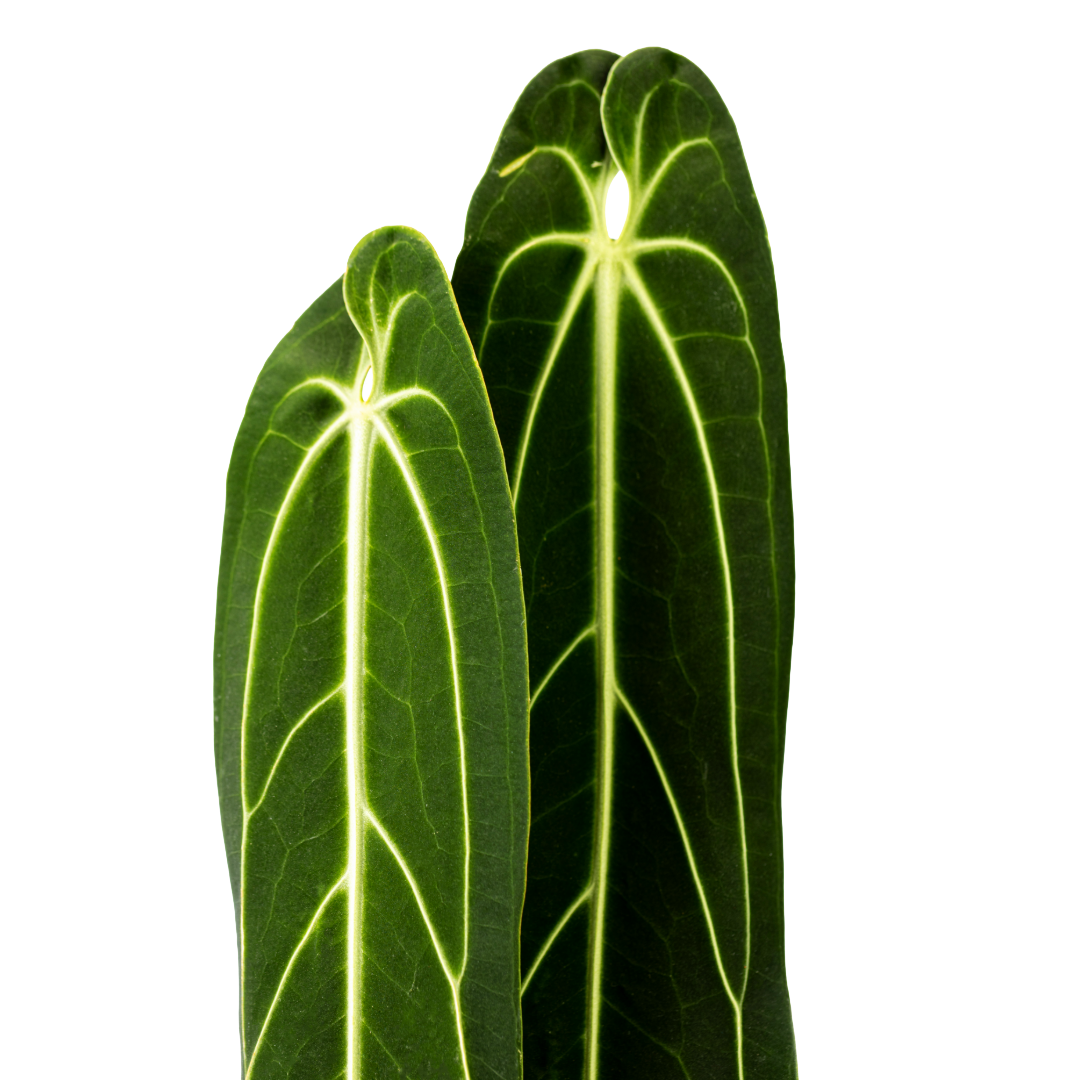
Anthurium
Share
Anthuriums such as Anthurium crystallinum, Anthurium clarinervium, Anthurium warocqueanum are among the most fascinating and decorative species of Anthuriums. These species are characterized by their deep green leaves with striking, silver or white veins. The velvety, almost leathery leaf tissue and elegant structure make them particularly desirable houseplants. To enjoy your Anthurium in full splendor, it is important to understand and observe its special care needs.
1. Location and Light Requirements
They originate from the tropical rainforests of Central and South America, where they thrive in the lower parts of the forest. They therefore prefer indirect light and do not tolerate direct sunlight.
- Light: These plants require bright, indirect light, but no direct sunlight, as this can burn the leaves and damage the velvety texture. Direct sunlight fades the leaves and can lead to unsightly brown spots. A window with mild morning or evening sun or a location in partial shade is ideal.
- Too little light: Too little light can cause the plant to grow slowly and its distinctive leaf veins to become less pronounced. Flowering may also decrease.
- Too much light: Direct sun leads to heat stress and burns on the leaves, which can quickly cause damage, especially to the velvety leaves.
2. Temperature and Humidity
These Anthurium species love warm and humid conditions. They require a constant temperature and high humidity to reach their full potential.
- Temperature: The ideal temperature is 22–26°C during the growing season. They do not tolerate cool temperatures and should not be exposed to below 15°C. A sudden drop in temperature or drafts can stress the plant and impair growth.
- Humidity: High humidity of at least 60-80% is crucial to keep the velvety leaves healthy. Especially in winter, when the heating air is dry, these plants can suffer from low humidity, which can lead to brown leaf tips and a loss of leaf structure. Use a humidifier or mist the leaves regularly with calcium-free water to increase humidity. Another option is to place the plant on a tray filled with pebbles and water to create a humid environment.
3. Watering and Water Requirements
Anthuriums require consistently moist soil, but not waterlogging. Waterlogging is particularly harmful as it can quickly lead to root rot.
- Watering: Water your plant when the top layer of soil is dry, but make sure the substrate does not dry out completely. In the warmer months (spring and summer), the plant should receive a little more water, while in winter it needs less water as its growth slows down.
- Water quality: It is best to use calcium-free water, as hard water with a high calcium content can damage the leaves and roots. If you use tap water, let it sit for a few hours before use so that the lime can settle. Room temperature is ideal, as cold water can damage the roots.
- Avoid waterlogging: Ensure that excess water can drain from the pot. A pot with drainage holes is essential to prevent root rot.
- Regularity: Maintain a consistent watering rhythm so that the plants always have slightly moist substrate. Too much water at once cannot be absorbed and can lead to leaf damage (edema).
4. Substrate and Repotting
Anthuriums require a well-draining substrate that allows the roots to breathe and retains moisture at the same time.
- Substrate: Use a mixture of soil, perlite, and coconut fiber or orchid soil. This mixture provides proper drainage and prevents waterlogging. Good air circulation in the substrate is particularly important so that the roots do not rot.
- Repotting: It is advisable to repot the plant every 1–2 years to renew the substrate and ensure that the roots have sufficient space. Choose a pot that is only slightly larger than the old one to promote root growth without excess water accumulating.
5. Fertilization
Anthuriums require regular nutrients during the growing season to grow vigorously and develop their leaves in full splendor. However, too much fertilizer can be harmful, so a balanced ratio is important.
- Liquid fertilizer: Fertilize your plant every 2–4 weeks with a balanced, liquid fertilizer for houseplants that is specifically suitable for Anthuriums. Make sure to use only the recommended amount of fertilizer to avoid over-fertilization.
- Fertilize less in winter: In the colder months, when the plant enters a dormant phase, fertilization should be reduced to every 6–8 weeks or stopped completely, as growth is slowed.
6. Leaf Care
The leaves are one of the greatest highlights of these plants. Regular care is required to keep the leaves shiny and healthy.
- Remove dust: Dust can cover the leaves of the Anthurium and impair photosynthesis. Wipe the leaves regularly with a damp, soft cloth. Use only calcium-free water to avoid stains.
- Misting: If the humidity is too low, you can gently mist the leaves with a sprayer to increase humidity and care for the leaves. Make sure the leaves are not dripping wet to avoid rot.
- Brown leaf tips: Brown or dried-out leaf tips are often a sign of too low humidity or incorrect watering. By keeping the environment more humid and regularly checking that the soil is not too wet, you can avoid this problem.
7. Pest and Disease Control
Anthuriums can be affected by thrips, aphids, spider mites, or mealybugs, especially if humidity is too low or care conditions are poor.
- Pest control: Regularly check the underside of the leaves for pests. If you discover any, treat the plant with a mild insecticide or neem oil. For spider mites, a spray mist with neem oil or treatment with soap solution helps.
- Prevent diseases: Root rot is caused by waterlogging, so make sure the pot is well-draining and excess water can drain away. At the first signs of leaf spots or rot, you should react quickly and repot the plant or remove affected areas if necessary.
Caring for Anthuriums requires some attention, especially regarding temperature, humidity, and light. These plants prefer high humidity, regular care, and consistently moist substrate.