
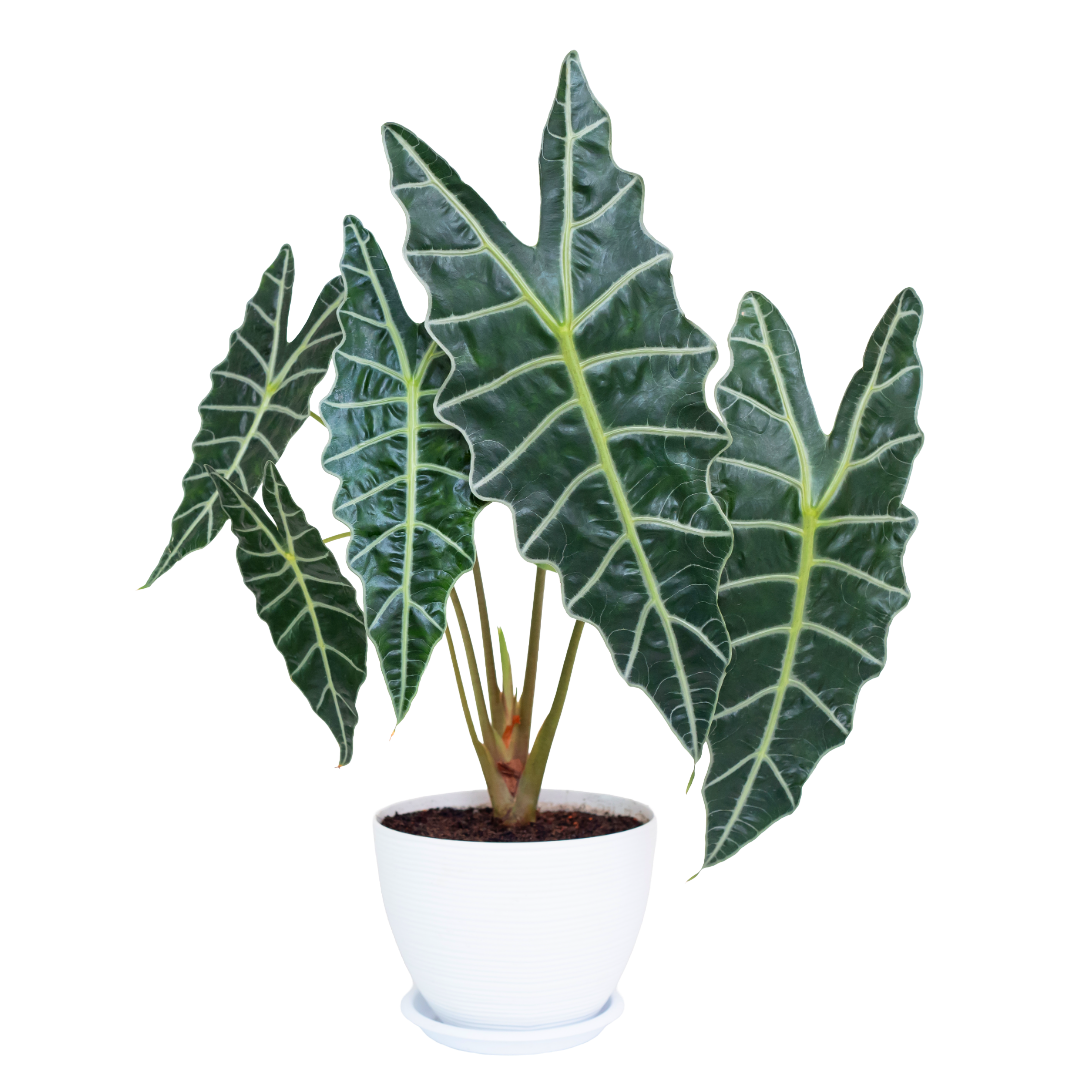
Alocasias
Share
Caring for Alocasias, also known as Elephant Ear plants, is a bit more demanding due to their tropical origin, but not impossible. These plants are very popular for their distinctive, large leaves and exotic appearance, but they have specific needs that must be met to thrive. Here is a comprehensive guide to Alocasia care:
1. Temperature
Alocasias prefer warm temperatures and feel most comfortable at 18°C to 25°C. They should be protected from cold drafts and sudden temperature fluctuations. Temperatures below 16°C can damage the plant, and below 10°C, frost damage is a risk. Make sure they are not near radiators or air conditioners, as drafts and sudden temperature changes can stress the plant.
2. Light
Alocasia plants like bright, indirect light. Too much direct sunlight can burn the delicate leaves and leave brown spots. A location near a window, under a grow light, or a shaded spot in a room with plenty of natural light is ideal. In corners that are too dark, growth will be slower, and the plant may lose its typical magnificent leaves.
3. Substrate
For Alocasias, a slightly acidic, well-draining substrate is essential. They prefer a mix that retains moisture well but also provides good aeration for the roots. A mixture of high-quality potting soil, perlite, and some orchid bark or coir is ideal to prevent waterlogging. Waterlogging is one of the main causes of root rot in Alocasia. The substrate should be kept consistently moist, but never too wet.
4. Watering
Alocasia plants need regular watering, but they are sensitive to waterlogging. It is important that the pot has sufficient drainage holes to allow excess water to escape. Water the plant when the top 2-3 cm of soil are dry, but avoid letting the roots stand in water permanently. In winter, when the plant grows slower, watering should be reduced.
5. Humidity
Alocasia loves high humidity. Ideally, humidity should be between 60% and 80%. In dry environments or during the heating season, it can be helpful to increase humidity by regularly misting the leaves or using a humidifier. Too low humidity can lead to brown leaf edges and leaf drop.
6. Fertilization
Fertilizing Alocasia plants is a key part of their care, as these tropical plants have a constant or increased nutrient requirement due to their rapid growth and large leaves. During the growing season in spring and summer, Alocasia should be fertilized regularly. There are special fertilizers for tropical plants that contain additional micronutrients such as iron, manganese, and zinc. These are ideal for Alocasia, as tropical plants often need these trace elements in greater quantities to stay healthy. Make sure the fertilizer is tailored to the needs of tropical plants, as they have a higher requirement for micronutrients. In autumn and winter, when growth slows down, fertilization should be reduced or stopped entirely.
7. Repotting
Alocasias prefer a tighter pot. However, that doesn't mean the roots should fill the entire pot. As they grow relatively quickly, they need to be repotted regularly. A new pot should only be about 2-3 cm larger than the old one to prevent waterlogging. It is a good opportunity to remove damaged or rotten roots and refresh the substrate.
8. Pests and Diseases
Alocasias are susceptible to pests such as spider mites, mealybugs, and scale insects. It is important to check the plant regularly, especially in dry climates. Leaf spot diseases or mildew can also occur if the humidity is too low. Make sure to clean the leaves with a damp cloth and use a mild insecticide if necessary.
9. Propagation
Alocasia propagation usually occurs via rhizomes. When repotting, small tubers are often found in the pot. These can be separated from the mother plant and placed in sphagnum moss, perlite, or stratum. The rhizomes should be placed in an environment with high humidity at constant temperatures of around
20°C. After a while, the rhizomes sprout and grow into independent plants.
10. Alocasia Varieties
There are many different types of Alocasia, which differ in size, color, and leaf shape. Here are some of the most popular types:
- Alocasia Polly (also called African Mask): Known for its distinctive, green, arrow-shaped leaves with white veins.
- Alocasia Macrorrhiza: A larger Alocasia with broad, glossy leaves that can grow up to 1.5 meters tall.
- Alocasia Amazonica: This plant has striking, dark green, glossy leaves with silver veins and is particularly suitable for smaller rooms due to its compact growth.
- Alocasia Odora: This species has large, heart-shaped leaves and can grow up to 2 meters tall in tropical climates.
- Alocasia Stingray: A well-known species with particularly decorative, pointed leaves that resemble a ray's tail.
- Alocasia Zebrina: This Alocasia has beautiful, deep green leaves with striking, striped stems.
Of course, there are many other species and also variegated forms or plants with velvety leaves like Alocasia Micholitziana Frydek or Alocasia Olanii.
Alocasia plants are beautiful but demanding houseplants that prefer warm temperatures, high humidity, and a well-draining substrate. With the right care, such as regular watering, high humidity, and sufficient light, the plant will quickly thrive and unfurl its distinctive leaves. Pay attention to proper watering, adequate fertilization, and pests to promote growth and ensure its health.
Repotting and Care
Every few years, it is advisable to repot your Alocasias to provide them with fresh soil and more space to grow. Make sure to regularly remove damaged or yellow leaves to maintain the plant's health. Alocasias can also occasionally be infested with pests, so check the leaves regularly for signs of insects.
By following these tips, you can ensure that your Alocasias thrive beautifully and bring you long-lasting joy. Have fun caring for your green beauties!